Timofei Kondratievich Kvastsov
Timofei Kondratievich Kvastsov is a tenant of the building at 302-bis Sadovaya Street in Moscow, a figure whose single act of anonymous denunciation sets in motion the arrest of the chairman of the tenants' association, Nikanor Ivanovich Bosoy, and reveals the pervasive atmosphere of surveillance and betrayal that defines everyday life under Soviet power. Kvastsov appears only briefly in the narrative, but his role as an informer—a man who weaponizes the state's apparatus against a neighbor for personal curiosity and petty malice—makes him a representative of the moral corrosion that Woland's visit exposes in Moscow society. His actions, though seemingly minor, have immediate and devastating consequences, and his own fate, swallowed by the same system he invoked, underscores the novel's darkly comic vision of a world where no one escapes the consequences of their choices.
Identity and Role as Informer
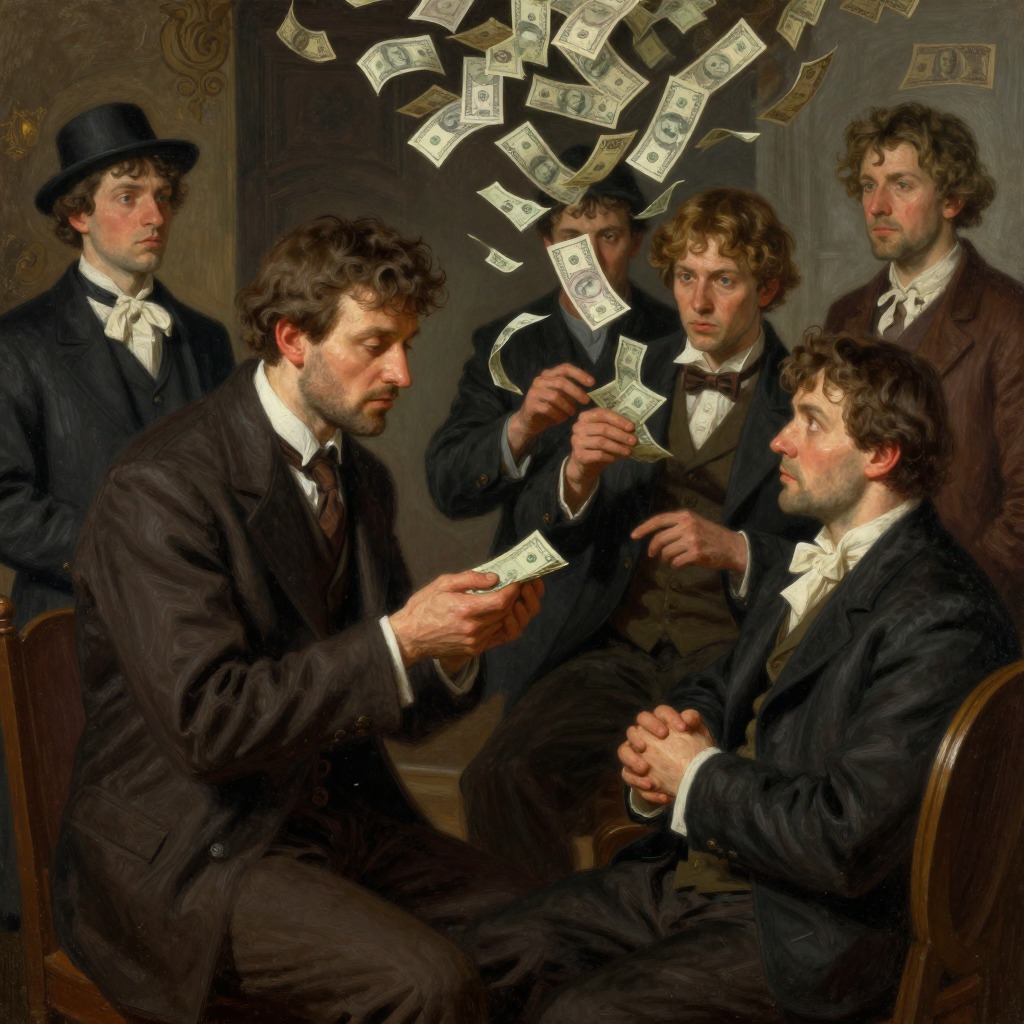
Kvastsov is identified as a tenant of apartment no. 11 in the same building where the late Mikhail Alexandrovich Berlioz and Stepan Likhodeev reside in the notorious apartment no. 50. He is characterized not by any physical description but by his behavior: he is a man who, after witnessing the police arrive to arrest Nikanor Ivanovich Bosoy, stands on the landing, placing first his ear and then his eye to the keyhole of the chairman's door, "melting with curiosity." This voyeuristic delight in another's misfortune is the key to his character. It is Kvastsov who, earlier, telephones the authorities to denounce Bosoy. Speaking in a tearful voice into the receiver, he identifies himself as a tenant of the house and reports that the chairman is "speculating in foreign currency," specifically that he has "four hundred dollars wrapped up in newspaper in the ventilation of the privy." He concludes his call with a plea: "I adjure you to keep my name a secret. I fear the vengeance of the above-stated chairman." This act of anonymous denunciation is a perfect, chillingly casual performance of the Soviet citizen's duty—and privilege—to inform on a neighbor.
Consequences of the Denunciation
The immediate consequence of Kvastsov's phone call is the arrest of Nikanor Ivanovich Bosoy. The police arrive at the chairman's apartment just as he is about to enjoy a meal of borscht with a marrow bone, and they discover the wad of money—which has been magically transformed from roubles into dollars by Koroviev's trickery—in the ventilation duct. Bosoy is taken away, staggering like a drunk man, muttering about "unclean powers." The denunciation thus serves as the catalyst for the chairman's descent into madness and his eventual confinement in Professor Stravinsky's psychiatric clinic, where he dreams of a surreal theatre of currency confiscation. Kvastsov's act, however, does not go unpunished. Within an hour of Bosoy's arrest, an unknown citizen appears at apartment no. 11, motions to Kvastsov with his finger, and together they vanish. The narrative offers no further detail, but the implication is clear: the informer has himself been informed upon, swallowed by the very system of mutual surveillance he so eagerly served.
Thematic Significance
Kvastsov embodies the theme of betrayal that runs through the Moscow sections of the novel. He is a minor character, but his actions are a microcosm of the society Woland and his retinue expose: a world where neighbor informs on neighbor, where the state's mechanisms of control are internalized and wielded by ordinary citizens against each other. His anonymous denunciation is a perfect example of the "cowardice" that the novel identifies as the most terrible of vices—a cowardice that manifests not as fear of an external enemy, but as a willing collaboration with the forces of oppression. Kvastsov's fate, disappearing as silently as he acted, mirrors the fate of so many in the era of the Great Terror, where the informer was as vulnerable as the informed-upon. He is a ghost in the machinery of the state, a figure who exists only to demonstrate how that machinery consumes everyone it touches.